SCABIES- Symptoms, Complications, Treatment and Prevention

Definition

Scabies is an itchy skin condition caused by a tiny burrowing mite called Sarcoptes scabiei. The presence of the mite leads to intense itching in the area of its burrows. The urge to scratch may be especially strong at night.

Scabies is contagious and can spread quickly through close physical contact in a family, child care group, school class, nursing home or prison. Because of the contagious nature of scabies, doctors often recommend treatment for entire families or contact groups.

Scabies is readily treated. Medications applied to your skin kill the mites that cause scabies and their eggs, although you may still experience some itching for several weeks.

Scabies

History

Scabies has been observed in humans since ancient times. Archeological evidence from Egypt and the Middle East suggests scabies was present as early as 494 BC. The first recorded reference to scabies is believed to be from the Bible – it may be a type of “leprosy” mentioned in Leviticus c. 1200 BC or be mentioned among the curses of Deuteronomy 28. In the fourth century BC, Aristotle reported on “lice” that “escape from little pimples if they are pricked” – a description consistent with scabies.

The Roman encyclopedist and medical writer Aulus Cornelius Celsus (25 BC – 50 AD) is credited with naming the disease “scabies” and describing its characteristic features. The parasitic etiology of scabies was documented by the Italian physician Giovanni Cosimo Bonomo (1663–1696) in his 1687 letter, “Observations concerning the fleshworms of the human body”. Bonomo’s description established scabies as one of the first human diseases with a well-understood cause.

In Europe in the late 19th through mid-20th centuries, a sulfur-bearing ointment called by the medical eponym of Wilkinson’s ointment was widely used for topical treatment of scabies. The contents and origins of several versions of the ointment were detailed in correspondence published in the British Medical Journal in 1945.

Epidemiology

Approximately 300 million cases of scabies are reported worldwide each year. Natural disasters, war, and poverty lead to overcrowding and increased rates of transmission.

In industrialized countries, scabies epidemics occur primarily in institutional settings, such as prisons, and in long-term care facilities, including hospitals and nursing homes. Scabies occurs more commonly in fall and winter months in these countries. Prevalence rates for scabies in developing nations are higher than those in industrialized countries.

A survey of children in a welfare home in Pulau Pinang, Malaysia found that the infestation rate for scabies was highest among children aged 10-12 years. The disease was more commonly evident in boys (50%) than in girls (16%). The overall prevalence rate for scabies was 31%.

Of 200 dermatology outpatients in Sirte, Libya, with scabies, the following distribution was found:

  • Females – 59%
  • Children – 37.5%
  • Military personnel – 18%

While many accounts of the epidemiology of scabies suggest that epidemics or pandemics occur in 30-year cycles, this may be an oversimplification of its incidence, since these accounts have coincided with the major wars of the 20th century. Because it is not a reportable disease and data are based on variable notification, the incidence of scabies is difficult to ascertain.

Scabies is clearly an endemic disease in many tropical and subtropical regions, being 1 of the 6 major epidermal parasitic skin diseases (EPSD) that are prevalent in resource-poor populations, as reported in the Bulletin of the World Health Organization in February 2009. Prevalence rates are extremely high in aboriginal tribes in Australia, Africa, South America, and other developing regions of the world. Incidence in parts of Central and South America approach 100%. One report suggests the highest reported rates of the crusted scabies in the world is in remote Aboriginal communities of northern Australia.

Types of Scabies

Many people think that there are different kinds of scabies, but the truth is there is only one type of mite that causes the condition, which is the Sarcoptes scabiei mite. When talking about the classification or types of scabies, what they usually refer is the different ways that the rash can appear. These include:

Typical scabies: These are itchy rashes that appear on the hands, wrists and elsewhere; however, the scalp and face are spared.

Nodular scabies: This type appears as itchy bumps in the groin, armpits and genital areas.

Infantile scabies: A scabies infestation that appears on a child or infant, and are most often characterized by rashes on the hands and feet, as well as the face and scalp.

Another type is complicated scabies, and unlike the others, it does not specify where the rash occurs – rather, this is when scabies occurs with another skin-related condition, such as dermatitis, urticaria, or impetigo (infection).

Scabies may also be classified according to where the infestation breaks out. For example, scabies that affects occupants of a residential facility, such as boarding schools, rest homes, hospitals, prisons and camps is called institutional scabies.

The most severe type of scabies is crusted scabies. Also known as Norwegian scabies, as it was first identified in Norway during the mid-19th century, this severe condition usually occurs in people who are immunocompromised, particularly the elderly, disabled or debilitated.

Risks factors

Scabies can infest any human who comes in contact with the mites, including people in good health. The only known risk factor is direct skin contact with someone who is infested. Good hygiene and health practices cannot prevent transmission if there is close contact with an infected person. The contact one experiences in social or school settings is not likely to be sufficient to transmit the mites. Sexual or other close contact (such as hugging) is required to spread the condition. The condition does appear in clusters, so outbreaks may occur within a given community.

Life cycle

Life cycle of scabies

Causes of Scabies

Scabies is an infestation of the Sarcoptes scabiei mite, also known as the human itch mite.

After burrowing under the skin, the female mite lays its eggs in the tunnel it has created. Once hatched, the larvae move to the surface of the skin and spread across the body or to another host through close physical contact.

Humans are not the only species affected by mites; dogs and cats can also be infected. However, each species hosts a different species of mite, and while humans may experience a mild, transient skin reaction to contact with non-human animal mites, a full-blown human infection with animal mites is rare.

Scabies is highly contagious and spread via direct skin-to-skin contact or by using a towel, bedding, or furniture infested with the mites. As such, some of the most likely people to become infested with mites include:

  • Children attending day care or school
  • Parents of young children
  • Sexually active young adults (and people with multiple sexual partners)
  • Residents of extended care facilities
  • Older adults

People who are immunocompromised (including those with HIV/AIDS, transplant recipients, and others on immunosuppressant medications)

Symptoms

Itching: This is the main symptom of scabies. This is often severe and tends to be in one place at first (often the hands), and then spreads to other areas. The itch is generally worse at night and after a hot bath. You can itch all over, even with only a few mites, and even in the areas where the mites are not present.

Mite tunnels (burrows): These may be seen on the skin as fine, dark, or silvery lines about 2-10 mm long. They most commonly occur in the loose skin between the fingers (the web spaces), the inner surface of the wrists, and the hands. However, they can occur on any part of the skin. You may not notice the burrows until a rash or itch develops.

Rash: The rash usually appears soon after the itch starts. It is typically a blotchy, lumpy red rash that can appear anywhere on the body. The rash is often most obvious on the inside of the thighs, parts of the tummy (abdomen) and buttocks, armpits, and around the nipples in women. The appearance of the rash is often typical. However, some people develop unusual rashes which may be confused with other skin conditions.

Scratching: Scratching due to intense itching can cause minor skin damage. In some cases the damaged skin becomes infected by other germs (bacteria). This is a secondary skin infection. If skin becomes infected with bacteria it becomes red, inflamed, hot, and tender.

Aggravation of pre-existing skin conditions: Scabies can worsen the symptoms of other skin conditions, particularly itchy skin problems such as eczema, or problems such as psoriasis. Scabies can be more difficult to diagnose in these situations too.

Scabies in hand

Complications of Scabies

Vigorous scratching can break your skin and allow a secondary bacterial infection, such as impetigo, to occur. Impetigo is a superficial infection of the skin that’s caused most often by staph (staphylococci) bacteria or occasionally by strep (streptococci) bacteria.

A more severe form of scabies, called crusted scabies, may affect certain high-risk groups, including:

People with chronic health conditions that weaken the immune system, such as HIV or chronic leukemia

  • People who are very ill, such as people in hospitals or nursing facilities
  • Older people in nursing homes
  • Crusted scabies, also called Norwegian scabies, tends to be crusty and scaly, and to cover large areas of the body. It’s very contagious and can be hard to treat.

Diagnosis and test

Most diagnoses of scabies infestation are made based upon the appearance and distribution of the rash and the presence of burrows. Some common testing methods are:

Microscopic exam of scrapings from suspicious lesions – Scrapings are placed on a slide and examined under a microscope for S. scabiei mites

Burrow Ink Test (BIT) – The suspicious area is rubbed with ink, which is then wiped off. If infestation has occurred, the characteristic zigzag or S pattern of the burrow across the skin will appear.

Topical tetracycline solution – A topical tetracycline solution may be applied to the suspicious area as an alternative to the BIT. The excess solution is wiped off the area with alcohol and examined under a special light to identify the characteristic zigzag or S pattern of the burrow.

Shave biopsy – A fine layer of skin is shaved off at the possible site of infestation and examined under a microscope for evidence of mite infestation.

Needle extraction of mites – A needle is inserted into the length of the burrow and the mite is extracted with the needle and placed on a slide to be examined under a microscope.

The diagnosis of scabies can be especially difficult in elderly persons living in long term care facilities. Their skin is generally dry and scaly and there may be preexisting, chronic dermatological conditions for which oral or topical steroids have been prescribed. Usually, the first indication that a scabies infestation is evolving is complaints of itching and new onset of a rash by one or more residents within a period of 5-12 days.

Exposed health care workers, volunteers and frequent visitors may also complain of itching and rash at about the same time. Skin scrapings, when Georgia Scabies Manual 10 revised: 6/21/12 performed properly, will almost always be positive in persons suspected of having atypical or crusted scabies. However, newly infected persons are more likely to have typical scabies and skin scrapings, even when repeated several time at different sites, may be negative. However, even if a skin scraping or biopsy is negative, it is possible that a person is still infested. Typically, there are fewer than 10-15 mites on the entire body of the infested person, which makes it easy for an infestation to be missed.

Common sites for scabies rash

Scabies can develop anywhere on the skin. The mites, however, prefer to burrow in certain parts of the body. The most common places to have itching and a rash are:

Itching and rash may affect much of the body or be limited to common sites such as:

  • Between the fingers
  • Wrist
  • Elbow
  • Armpit
  • Penis
  • Nipple
  • Waist
  • Buttocks
  • Shoulder blades

The head, face, neck, palms, and soles often are involved in infants and very young children, but usually not adults and older children.

Common sites for scabies

Treatment and medications

Scabies treatment involves eliminating the infestation with medications. Several creams and lotions are available with a doctor’s prescription. You usually apply the medication over all your body, from your neck down, and leave the medication on for at least eight hours. A second treatment is needed if new burrows and rash appear.

Because scabies spreads so easily, your doctor will likely recommend treatment for all household members and other close contacts, even if they show no signs of scabies infestation.

Medications commonly prescribed for scabies include:

Permethrin cream, 5 percent (Elimite): Permethrin is a topical cream that contains chemicals that kill scabies mites and their eggs. It is generally considered safe for adults, pregnant women, and children ages 2 months and older. This medicine is not recommended for nursing mothers.

Lindane lotion: This medication also a chemical treatment is recommended only for people who can’t tolerate other approved treatments, or for whom other treatments didn’t work. This medication isn’t safe for children younger than age 2 years, women who are pregnant or nursing, the elderly, or anyone who weighs less than 110 pounds (50 kilograms).

Crotamiton (Eurax): This medication is available as a cream or a lotion. It’s applied once a day for two days. This medication isn’t recommended for children or for women who are pregnant or nursing. Frequent treatment failure has been reported with crotamiton.

Ivermectin (Stromectol): Doctors may prescribe this oral medication for people with altered immune systems, for people who have crusted scabies, or for people who don’t respond to the prescription lotions and creams. Ivermectin isn’t recommended for women who are pregnant or nursing, or for children who weigh less than 33 pounds (15 kg).

Although these medications kill the mites promptly, you may find that the itching doesn’t stop entirely for several weeks.

Doctors may prescribe other topical medications, such as sulfur compounded in petrolatum, for people who don’t respond to or can’t use these medications.

Prevention of Scabies

To prevent re-infestation and to prevent the mites from spreading to other people, take these steps:

Clean all clothes and linen: Use hot, soapy water to wash all clothing, towels and bedding used within three days before beginning treatment. Dry with high heat. Dry-clean items you can’t wash at home.

Starve the mites: Consider placing items you can’t wash in a sealed plastic bag and leaving it in an out-of-the-way place, such as in your garage, for a couple of weeks. Mites die after a few days without food.

Owner of Ikoyi 21-storey collapsed building, Femi Osibona is Dead

The developer of the collapsed building in Ikoyi area of Lagos State, Femi Osibona has been found dead.


Osibona’s body was discovered among others during the rescue process at the site of the building on Thursday.

Lagos commissioner for information and strategy, Gbenga Omotoso confirmed the development.
“He is dead. He was brought out dead this evening”, he said.


The high-rise building under construction by Fourscore Homes, a Lagos-based real estate firm located along Gerrard Road, collapsed on Monday afternoon.

While it is yet to be clear the total number of people in the building at the time of the collapse, witnesses say dozens may have been trapped.

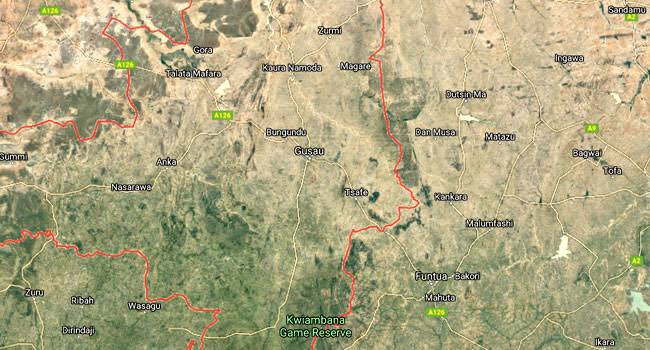
JUST IN; Notorious bandit’s Leader, Dogo shot dead by his men in the forest

A notorious bandits’ leader, Dogo Gide has been reportedly killed in his hideout by some of his men who collaborated with another notorious bandits’ group led by late Damina.


He was being treated for gunshot injuries earlier sustained in a battle at Kuya Bana forest of Zamfara State.

According to a source, Dogo Gide’s death has become a great advantage in the fight against armed banditry, kidnapping and cattle rustling in Nigeria.


Dogo Gide had been terrorising many communities in Zamfara, Niger, Kaduna, katsina and Kebbi States over the years.


He killed another notorious bandits’ leader, Buharin Daji some years ago.

“At the height of his notoriety he controlled several hundred of heavily armed men and has camps in Kuya Bana forest, Zamfara State, Goron Dutse forest, Dogon Gona forest in Birnin Gwari and Shiroro LGAs, respectively in Kaduna/Niger States and Kafarma forest.

“Dogo Gide was the brain behind the kidnap of one hundred and twenty six students of Bethel Baptist Secondary School, Maraban Damishi, chukun Local Gvernment Area of Kaduna State on 5th July 2021, where over thirty students and several staff of Federal Government College, Birnin Yauri were abducted about four months ago”


“They regained their freedom after several millions of naira was paid as ransom by the parents and well wishers of the abductees.


“The present disagreement between different factions of the bandits is a welcome development and is coming on the heels of relentless clampdown on armed bandits by our gallant security forces. Several of the most notorious armed bandits’ leaders have either been killed or arrested by the security forces,” the source said.

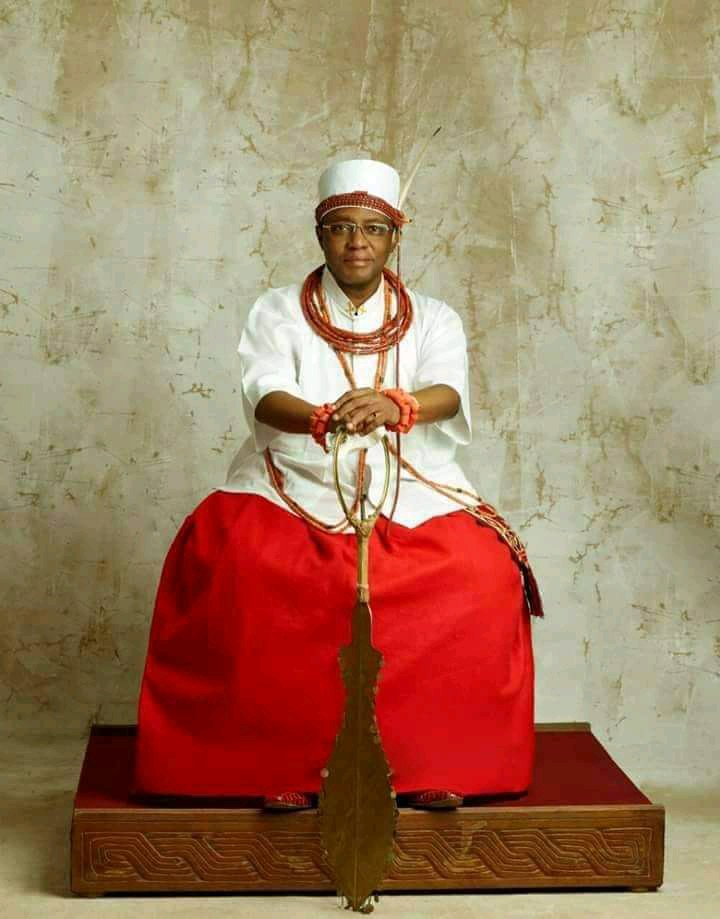
ANNIVERSARY THANKSGIVING: Ugbo Extols Benin Monarch’s Giant Strides

The President of Benin Solidarity Movement (BSM) Worldwide, and Private Land Recovery Agent to the Oba of Benin Kingdom, Ambassador Elder Curtis Eghosa Ugbo has commended the Oba of Benin, Omo N’Oba N’Edo, Uku Akpolokpolor, Oba Ewuare 11 Ogidigan for his unpresidented strides since ascension to the throne of his forbears five years ago.

Elder Ugbo, described the monarch as a father who is keen at ensuring peace across communities and overall development of the kingdom and state at large.

The patriotic Benin freedom fighter, disclosed this at a thanksgiving service of the Oba Ewuare II at the Holy Aruosa Cathedral, Benin City, Edo State.

He posited that the various steps taken so far by the royal father, including the abolishing of CDA, illegal extortions Okaeghele, including the invocation of deadly ancestral course on human traffickers who were at discrediting the Benin race, have brought some respite to the land.

“We thank God Almighty and our ancestors for the five years His Royal Majesty’s five years on throne. Our Oba has brought great relief to the kingdom and the state at large.

“Our monarch has broken an imaginable grounds especially the prescribing of the deadly activities of CDA, human traffickers as well as illegal extortions by some faceless Okaeghele. Our Oba has achieved in others areas which has further the course of development in the kingdom. We must all join hands with our great Oba to develop Edo state,” Ugbo stated.

While calling on all to support the monarch in developing the kingdom, Ambassador Elder Curtis Eghosa Ugbo stressed that Benin kingdom must attained it’s desired lofty height.

OBA AKIOLU OF LAGOS; Oba of Benin, head of the Benin Empire owns Western, Southern and Eastern modern day Nigeria


The dust has finally settled after years of controversies and heated arguments who the real owners of present day Lagos are, the whole of Western Nigeria and the East of the Niger down to the Nigerian south Atlantic Coast.

The Oba of Lagos, His Royal Highness, Oba Rilwan Akiolu, has finally told the world via a historical narrative and background the real owners of Nigeria’s economic capital city of Lagos and parts of neigbouring Benin Republic.

Lagos, he said, belongs to the Great Benin Kingdom and has never been part of Yoruba land.

This was contained in a statement issued and signed by the Lagos Monarch which was released from his palace.

The statement reads:

“Coming from the palace, with what I was told by my late paternal grandmother who is a descendant of Oba Ovonramwen Nogbaisi and also reading from factual Historical books, let me share this Knowledge with you all on Eko/Lagos.

“Modern day Lagos was founded by Prince Ado, the son of the Oba of Benin,

Prince Ado was the first Oba of Lagos, the son of the Bini King, Prince Ado, named the town Eko until the Portuguese explorer Ruy de Sequeira changed the Maritime town to Lagos, which at that time from 1942 was Portuguese expedition center down the African Coast.

“It was a major centre of the slave trade until 1851. Lagos was annexed by Britain via the Lagos treaty of cession in 1861, ending the consular period and starting the British Colonial Period.

The remainder of modern-day Nigeria was seized in 1886 when the Colony and Protectorate of Nigeria were established in 1914 Lagos was declared its capital due to the struggle of the Bini King.

“Lagos experienced growth prior to the British Colonial rule and even more rapid growth during the Colonial rule throughout the 1960s, 70s, continued through the 80s and 90s till date.

Thanks to the Awori’s, Bini’s, Yoruba’s, migrants across the nation and the world at large, as no particular group of people can take the glory alone.

“Lagos is made up of Lagoons and creeks.

The Lagos lagoon, Lagos Harbour, five cone creeks, Ebute-Metta creeks, Porto-Novo creeks, New canal, Badagry creeks, Kuramo waters and Lighthouse creeks.

“The Awori’s and Bini’s are known to be the first settlers of the Eko land.

The Awori’s are speakers of a distinct dialect close to that of the Yoruba language with a rich Bini mixture.

Traditionally, Awori”s were found in Ile-Ife, they were known to be the Bini’s who followed their self-exiled Prince, the first son of the Ogiso (now called Oba) of the Benin Kingdom, whose step-mother was after his head.

“The exiled Benin Prince Izoduwa known to the Yorubas as Ooduwa (Oduduwa) was made the ruler of the Ife people due to his powers and followers from the Great Benin-Kingdom.

“Izoduwa (Ooduwa) was made the first King of Ile-Ife in 1230 AD. His followers from his father’s Kingdom in Benin are the today’s Awori people who settled in Eko now called Lagos.

“In 1300, the King of Benin-Empire heard from one of his traders who was a settler in Eko on how the Bini’s were treated by the Awori’s who lived in their area.

Upon hearing this, the King of Benin commanded the assembling of a war expedition, led by his son, Prince Ado, which headed the settlement of the Awori’s and demanded an explanation.

“On arriving Eko, Prince Ado and his Army were more than received. The Aworis asked the Bini Prince to stay and become their leader.

Ado agreed on the condition that they surrender their sovereignty to the Oba of Benin, to which the people agreed. Hearing this, the King of Benin gave his permission for Prince Ado and the expedition to remain in Eko.

“The Oba of Benin sent some of his chiefs including the Eletu, Odibo, Obanikoro and others to assist his son, Oba Ado in the running of Eko.

“From the crowning of Prince Ado as the first Oba of Lagos (then called Eko), Lagos served as a major center for slave trade from which the Aworis, the Oba of Benin and his son the Oba of Lagos and all the children/descendants who took over as his successors for over four centuries supported the trade.

“The Oba of Benin was the head of the Benin Empire which is the present-day Western, Southern and Eastern modern day Nigeria.

The King never obliged anyone to speak the Bini language as he believed everyone was entitled to their own choice of language.

“The name Eko was given to it by the first king of Lagos, Oba Ado, the young and vibrant Prince from Benin.

Eko was the land now known as Lagos Island, where the king palace was built.

“The palace is called Idugaran meaning “palace built on pepper farm”

Oba Ado and the warriors from Benin together with the early Bini’s settlers in Eko and the Awori people settled in the southern part of Eko called “Isale Eko”. “Isale literally means bottom”. Must have been used to indicate downtown (as in downtown Lagos)

“Until the coming in of the Benin’s 1300AD, Lagos geographical boundary was Lagos mainland, Lagos Island, the seat of the Oba of Lagos then consisted of a pepper farm and fishing post. No one was living there.

“About 1450 AD some Yorubas who hailed from Isheri in Ogun-state and Ekiti were allowed by the King to settle in Eko during a war, they came in a very large numbers thereby surpassing the numbers of the Awori’s and Bini’s. (Hence Yorubas claim to own Eko due to their numbers).

“Oba Ado fell in love with a beautiful woman whose father was Awori and mother a daughter to one of the chiefs; they had two sons and also a daughter Erelu Kuti, who begot Ologun Kutere who later became King.”

SERAP: Sues President Buhari Over Plan To Monitor WhatsApp Calls, Messages Of Nigerians.


Socio-Economic Rights and Accountability Project, SERAP, has sued President Muhammadu Buhari, asking the court to declare illegal and unconstitutional the plan by the administration to track, intercept and monitor WhatsApp messages, phone calls, and text messages of Nigerians and other people.

Joined in the suit as Respondents are: Abubakar Malami, SAN, Minister of Justice and Attorney General of the Federation; and Zainab Ahmed, Minister of Finance, Budget and National Planning.

SERAP stressed that any form of monitoring calls, messages severely threatens and violates the right to the preservation of privacy.

The suit followed the proposal in the Supplementary Appropriation Act signed in July 2021 to spend N4.87 billion to monitor private calls and messages. The amount is part of the N895.8 billion supplementary budget approved by the National Assembly.

In the suit filed last Friday at the Federal High Court in Abuja, SERAP is seeking: “an order of perpetual injunction restraining President Buhari and any other authority, persons or group of persons from unlawfully monitoring the WhatsApp messages, phone calls and text messages of Nigerians and other people.”

The suit filed on behalf of SERAP by its lawyers, Kolawole Oluwadare and Kehinde Oyewumi, is also seeking “a declaration that any monitoring of WhatsApp messages, phone calls and text messages is oppressive and draconian, as it threatens and violates sections 37 and 39 of Nigerian Constitution 1999 [as amended]; Article 9 of the African Charter on Human and Peoples’ Rights; and Articles 17 and 19 of International Covenant on Civil and Political Rights, to which Nigeria is a state party.”

SERAP maintained that; “The plan to monitor WhatsApp messages, phone calls and text messages is an arbitrary interference by the administration into respect for family and private life, the home, and correspondence. It also fails to meet the requirements of legality, necessity, and proportionality.

BENIN IS NOT CLAIMING THEM, THEY ARE THE ONES RIGHTLY CLAIMING THE LAND OF THEIR ANCESTORS

THE SOLILOQUIES OF ELDERS

Based on historical facts available to them collaborated by oral traditions.

Oba of Lagos said he is a Benin man,

Obi of Onitsha said he is a Benin man,

Osemawe of Ondo said he is a Benin man,

Eze of Oguta said he is a Benin man,

Eze of Enugu Ezike said he is a Benin man,

Olu of warri said he is a Benin man,

Ovwie of Okere( Urhobo) Kingdom said he is a Benin man,

Obi of Isele Ukwu said he is a Benin man,

Obi of Agbo said he is a Benin man,

The king of Ibuza said he is a Benin man,

Orodje of Okpe said he is a Benin man,

The Dukes of Oleh and Ozoro( both of Isoko) said they are from Benin,

Udezi( Deji) of akure said he is a Benin man,

The Dukes of Ikwerre said they are Benin men,

The King of Ogbia Kingdom said he is a Benin man,

The paramount ruler of dahomeans in Republic of Benin said he is a Benin man.

These are major traditional rulers in southern Nigeria and beyond and yet some dare open their mouth to denigrate Benin history and even call Edo people a minority stock when history and cultural evidence show Edo is the largest ethnic group in Nigeria until it was decimated and adulterated by the sinister manipulations of the colonialist and their in-house collaborators.

THEY DISPLAYED MY MOCK COFFIN PUBLICLY ~ Ex President Goodluck Jonathan.


Photographs Of My Mock Coffin Traumatised My Mother Who Lost Eight Children, Says GEJ
Former President Goodluck Jonathan says pictures of his mock coffin displayed in the media during the anti-fuel subsidy removal protests of 2012 traumatised his aged mother who had lost eight children.
Jonathan said this in his recently published book titled, My Transition Hours.
The former President said, “The protests continued unabated. In all of these, one woman I pitied most was my aged mother who was with me in the State House.
“Every day, she watched on television protesters carrying a casket with my picture on it and having the inscription ‘Rest In Peace.’
“I could imagine her trauma. This is a woman who had 10 live births with only my elder sister and I surviving.”
Jonathan said during the protests, several notable Nigerians visited him, asking him to reverse the increment in the pump price of petrol.
Some of the prominent Nigerians who visited him include: General-Overseer, Living Faith Mission (Winners Chapel) Bishop David Oyedepo; Primate of the Anglican Church, Rt.Rev Nichola Okoh and eight other clerics.
He said what was more disheartening was the fact that the opposition in Lagos had hijacked the protests.
Jonathan added that even the Nigeria Labour Congress which had been briefed on the matter before the subsidy removal was announced was co-opted into joining the protests.
The former President added, “In Lagos State for instance, it was like a carnival. Musicians, comedians and other celebrities were engaged by opposition elements to join the protests. Refreshments were served to protesters.
“Every morning Lagos State government workers cleaned up the Gani Fawehinmi Park and prepared it for the day’s protests. It appeared as though the protesters were very special guests of the Lagos State Government. Similar scenarios played out in other opposition controlled states.”
Jonathan further stated that the House of Representatives, which was led by pro-opposition Speaker, Aminu Tambuwal, decided to exploit the situation.
He said the House accused him of fleeing the country in a bid to exploit the situation for political gain.
The former President added, “The House of Representatives whose Speaker, Aminu Tambuwal, was hobnobbing with the opposition (he eventually defected to the opposition) did not help matters.
“Thinking that I had left the country for South Africa to attend the centenary celebration of the African National Congress, Speaker Tambuwal convened the House to sit on a Sunday just to condemn the deregulation.
“That was the first and only time in Nigeria’s political history that the parliament sat on a Sunday. At that sitting, an opposition member of the House got up to allege that I had abandoned the nation at such a crucial time to join festivities in South Africa.
“Unknown to the House, on that same day while they were sitting, I was at Eagle Square to inaugurate mass transit vehicles my administration purchased to cushion the effect of the subsidy removal.”

NB

Same People who Occupied Nigeria then suddenly became dumb without Brains now…..

BREAKING; King Sunny Ade’s wife, Risikat Ajoke Adegeye, is dead

A former member of the Lagos State House of Assembly, and wife of legendary musician, King Sunny Ade, Hon Risikat Ajoke Adegeye is dead.

The deceased who was also a former Chairmanship Aspirant under the platform of All Progressives Congress,APC, in Amuwo Odofin Local Government Area, reportedly died in the early hours of Tuesday.

Adegeye, a devoted and loyal party member of the APC, died after a brief sickness.
As of press time, the cause of her death was unknown. A source, infoned that the death could have been as a result of cancer which the deceased had battled for a long time before she succumed finally to death.

However, Mr George Folarin Olawande, confirmed the death on behalf of the family in a statement on Tuesday.

The statement read in part: “We wish to formally inform, friends, well-wishers, political associates, and the general public that Hon Risikat Ajoke Adegeye passed on after a brief illness during the early hours of Tuesday, 21st September 2021.

“Hon Risikat Ajoke Adegeye was a Honourable Member in the 6th Assembly of the Lagos State House of Assembly.

“She will be greatly missed not only by her immediate family but also by her political associates and followers. Further information in respect to her burial ceremony will be announced later after extensive consultations with the family.

“Thank you as we pray that she continues to rest peacefully and eternally with the Almighty God.”

BENINS WERE THE FIRST EDUCATED NIGERIANS

Dr. Samuel Okafor, the Igbo scholar In an article made available to News Express, Okafor responds to critics of his claims and sets the records straight on great Nigerians, mainly of the past, from various parts of the country. He also explains his motive and suggests the way forward in Igbo-Yoruba relations. Please read on:

I had earlier made a submission stating that the Binins were the first to be exposed to Western education. This very position which I presented was not well received by a lot of my Yoruba brothers who have gone to great lengths to discredit this true historical fact.

Some have even resorted to outright fabrication of history. They have based their own position on sentiments which have no bearing to known historical research. I have thus decided to provide further historical evidences to further substantiate my previous position, because the very essence of historical research is not to belittle any ethnic nationality but to provide a deeper understanding of our history with a view of correcting some wrong pre-conceived notions held or being propagated by some ethnic nationalities.

In historical research, when one disagrees with another position, that person must provide an alternative and completing evidence to the contrary, and also provide references that can be crosschecked for accuracy. My Yoruba brothers have failed to provide the much required evidence. They have simply stated an alternative position without showing that indeed their position on the balance of historical evidence is the one to adopt. This, as one of my great professors, Adiele Afigbo, would put it, is the lazy historical approach to historical research. I would now provide incontrovertible evidence that the Binis were the first to be exposed to Western education.

THE BINIS WERE THE FIRST NIGERIANS EXPOSED TO WESTERN EDUCATION

I would ask that readers google the name, Ohen Okun. Ohen Okun from historical records held in both Benin archives and in the annals of Portuguese history was the Olokun priest of the port town of Ughoton Benin. Oba Esigie the Great, who reigned from 1504 to 1549, sent the Ohen Okun to Portugal as the Ambassador of Benin to the Portuguese Court. While in Portugal, the Portuguese Affonso D. Aveiro remained in Benin as the Portuguese envoy. Ohen Okun was treated with respect while in Portugal. He later returned to Benin and is described as the first known Diplomat of Nigerian origin to Europe.

A BINI MAN WAS THE FIRST NIGERIAN GRADUATE

Let us go further; who was the first known Nigerian graduate? As this issue has generated so much controversy, it is important that I deal with it comprehensively and provide a clear evidence to substantiate my research. Readers, again kindly google the name Olu Atuwatse (Dom Domingo). Olu Atuwatse was the crown prince of the Bini Empire who was sent to Portugal in 1601 for advanced studies by his father, the then reigning Oba. He graduated from the University of Coimbra in 1611. He was the first Nigerian to obtain a European university degree. He later married the daughter of a Portuguese noble, Dona Feirs. Their son Antonio Domingo referred to in Benin history as the Golden Skinned King succeeded him to the throne in 1643.

Antonio Domingo, a Christian who wanted to spread Christianity throughout the Empire, wrote the Pope in 1652 asking for Missionary assistance. This is the oldest letter written in Nigeria. I think this lays to rest which ethnic nationality produced the first educated Nigerians. If required, I would provide other historical research to substantiate my position further. I ask my Yoruba brothers to provide the same.

Dr Okafor